Spongia cannabina (Lat. Axinella cannabina). It lives in caves and meadows of seagrass. It can grow up to 1 m. The sponge is upright, arboreal, with one shaft or with several branches. The surface is rough and animated by lobes and protrusions. The colour of the sponge is orange. It is prey to the species Phyllidia flava – sea slug. It is an…
Choose a language:
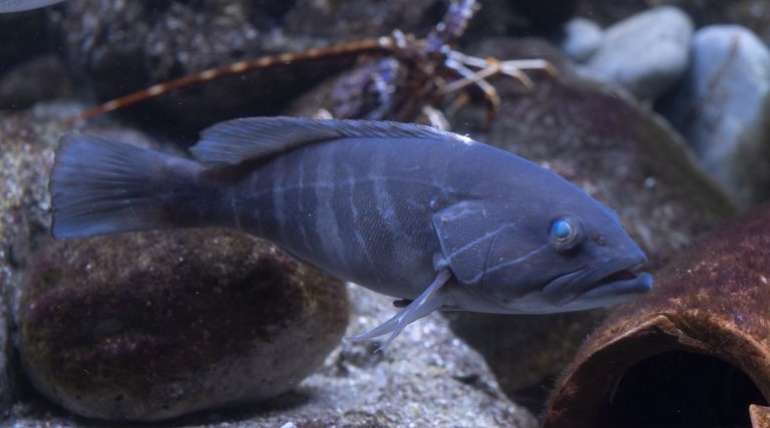
Golden grouper (Lat. Epinephelus costae). It loves the relatively warm waters and the rocky seabeds, but it can be found also in those mixed with sand. Unlike the other groupers, usually solitary and sedentary, it moves in small schools between the 20 and the 80 m of depth. It may reach the 8 kg per a length of 80 cm, but…
Spiny lobster (Lat. Palinurus vulgaris). It lives on rocky bottoms in holes and crevices and reaches a length of 45 cm without tentacles and a weight of 5 kg, but it usually weighs 0.6 kg. It lives up to 10-160 m deep, mostly 30-80 m deep. The end of autumn and the beginning of winter mark the time of spawning.…
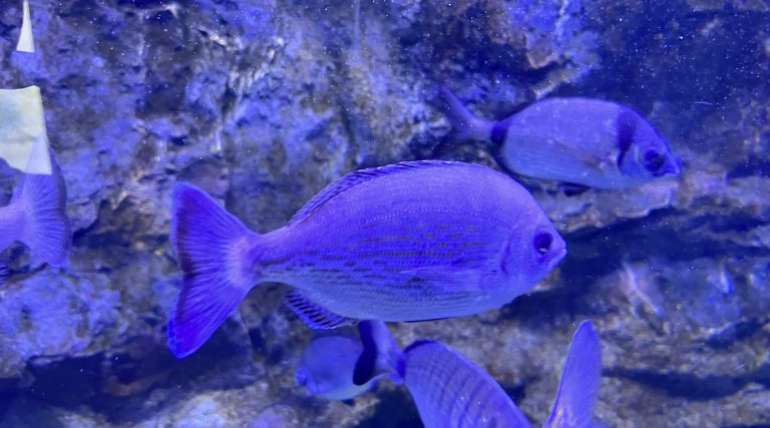
Black sea bream (Lat. Spondyliosoma cantharus). Coastal species, leaves near rocky coast and seaward reefs and above sandy-gravel bottom. Leaves in schools to depth of 5-150 m. During the night, all black seabreams wear a mimetic pyjama with dark vertical bands. Grows till 50 cm (2.5 kg), common 20-30 cm. Feeds with algae and small benthic invertebrates. Catches by trawls, setnets,…
White grouper (Lat. Epinephelus aeneus). occurs on substrates of rock or mud and sand while the juveniles are found in coastal lagoons and estuaries, and adults are found at depths between 20 and 200 metres (66 and 656 ft). The maximum total lenght this species has been recorded at is 120 centimetres (47 in), although they are more common at around 60 centimetres (24 in), and…